A useful quality discussion starts with the specification: what will be checked, when it will be checked and how a nonconformity will be handled. “Quality checked” is not enough information to judge whether an inspection addresses the requirements of your order.
Our factory’s quality checks cover incoming materials, in-process work and finished footwear. For a particular order, the inspection scope, records and acceptance requirements should be agreed during project review rather than assumed from a general factory introduction.
Check incoming materials against agreed requirements
Before production, establish which material and component characteristics need checking. Depending on the specification, these may include appearance, dimensions, colour consistency and identification against the approved material reference.
Ask how nonconforming materials are identified, separated and reviewed before use. If a requirement needs laboratory testing or a supplier document, specify that separately. A visual check cannot establish chemical compliance, durability or protective performance.
Check the process while the order is being made
Agree which first-piece and in-process checks are appropriate for the construction. These may cover stitching, assembly, appearance and measurements against the approved specification. Confirm how an issue is recorded, who reviews it and how affected work is identified before it moves forward.
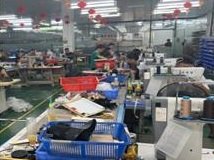

Agree the final inspection plan
Clarify whether the order requires full visual inspection, acceptance sampling or both. These are different activities. Where an AQL-based sampling plan is used, agree the applicable standard and edition, lot definition and size, inspection level, sampling plan, defect classifications and acceptance and rejection rules.
AQL means acceptance quality limit. It is not the same as inspection level, and an AQL value alone does not specify the sample size. Passing a sample inspection does not mean every pair is defect-free. Do not assume an AQL of 2.5, or any other value, applies unless it is part of the agreed inspection requirements.
Put the release decision in writing
- Which product specification, approved sample and defect definitions will inspectors use?
- What records will be supplied, by whom and at what stage?
- Who may approve shipment, and what happens after a failed inspection?
- Are independent testing or inspection services required for this order?
Any rework, re-inspection or concession process should be agreed in advance. A reference to ISO 9001 is not evidence of a current certificate; if certification is relevant, verify the certificate holder, scope and validity separately.
Discuss your inspection requirements
Share the product type, target market and checks your team requires so the scope can be reviewed before an order is agreed.
Technical reference: ISO 2859-1 — sampling schemes indexed by acceptance quality limit for lot-by-lot inspection. Read the ISO overview